REMEMBERING THERESA CHEE
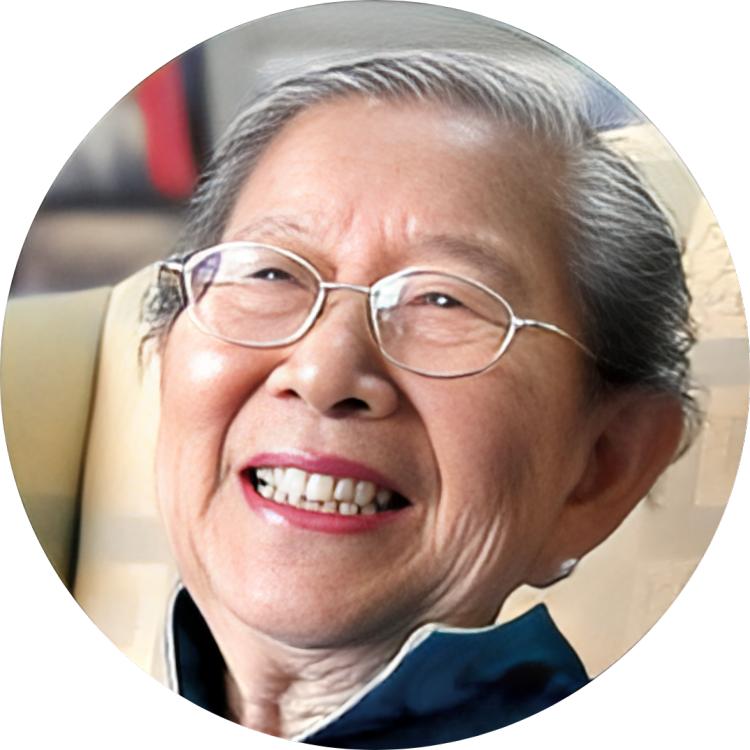
THERESA CHEE
25 April 1925 to 1 June 2025
The Spiritual Assembly of the Bahá’ís of Malaysia
Dear Bahá’í Friends,
The Universal House of Justice was saddened to learn of the passing of Theresa Chee, dedicated handmaiden of the Blessed Beauty. May the memory of her long life of devoted service to the Cause of God, including as an Auxiliary Board member, be an enduring source of inspiration to all who knew her. Kindly convey to the members of her family and other loved ones the heartfelt condolences of the House of Justice for the loss they have suffered and assure them of its supplications at the Sacred Threshold for the progress of her illumined soul in the heavenly kingdom and that, through the unfailing mercy of the Almighty, they may find comfort and strength at this time of parting.
With loving Bahá’í greetings,
Department of the Secretariat
The Universal House of Justice
2 June 2025
Madam Theresa Chee was lovingly referred to as the “Spiritual Mother” of the Northern Believers in Peninsular Malaysia—a title bestowed upon her by the Hand of the Cause of God, Dr. Raḥmatu’lláh Muhájir. This title is more than fitting, as it reflects the pivotal role she played in attracting and nurturing individuals of great capacity in the northern region, guiding them to spiritual maturity. She holds the unique distinction of being the first believer in Malaysia to be appointed in person by a Hand of the Cause as an Auxiliary Board member. This is the story of the dramatic circumstances that led her to embrace the Bahá’í Faith, and of how she emerged as one of the most outstanding heroines in the history of the Faith in Malaysia.
MOVED TO ALOR STAR
Theresa Chee, the eldest daughter of Yankee Leong—the first Bahá’í believer in Peninsular Malaya—was born on 25 April 1925 in Malacca and received her education at the Convent in Malacca. A devout Catholic, Theresa was so deeply involved in her faith that the teachers who took a great liking for her had expected her to become a nun. After her schooling Theresa started her job as a typist in Nippon Hōsō Kyōkai/NHK Japan Broadcasting Corporation during the Japanese occupation of Malaya. Following the passing of her brother Peter Yan Swee Kee in 1946, she moved to Seremban in 1947 to live with her father, who had been left lonely by the loss. Theresa worked under the British administration in various offices, including the Special Branch (Police), Secretariat, Treasury, and Department of Chinese Affairs.
She had met Chee Ah Kin of Penang at a social dance in 1947, and they were married on 30 December 1952. Chee Ah Kin, a Penang native, had been awarded a Kedah State Scholarship to undergo technical training in Kuala Lumpur. In return for the scholarship, he was required to serve in Kedah, where he began his career in the Public Works Department (PWD) with Roads and Buildings. He lived in a room within the aerodrome building, located at the 7th Mile on Aerodrome Road, near Alor Star.

Theresa and Chee Ah Kin, 1952. (Photo credit: Tan Boon Tin)
After their honeymoon in Penang, Theresa joined her husband at this humble location in 1953. There was no electricity in their dwelling, and lighting was provided by a simple gas lamp. Thus began Theresa’s married life—with simplicity and resilience that would characterize much of her remarkable journey ahead. Theresa took up employment with the Police Special Branch, reviewing and sorting through photographs of suspected communist elements during a tense period of political unrest in Malaya. By March 1954, she began teaching at St. Michael’s National Primary School, a Christian missionary school in Alor Star. In addition to her personal commitment, she also guided children aged eight and nine from Catholic families, helping to strengthen their foundation in the Christian faith through Catechism and First Communion classes. Both Chee Ah Kin and Theresa were deeply involved in Catholic Church activities. Ah Kin supervised the building of a new church while Theresa would accompany the parish priest to rural villages to distribute rice, milk, and goods collected from shopkeepers. Her life at this stage was one of spiritual dedication, community service, and discipline—hallmarks that would later find deeper expression as her spiritual path unfolded.
DISCOVERED THE FAITH
It was through their father, Yankee Leong, that Theresa and her younger sisters were first introduced to the Bahá’í Faith. When Yankee Leong accepted the Faith in 1953, he hoped that all his daughters would one day embrace it as well. In 1954, when all five daughters—Theresa, Rose, Lily, Christie, and Pauline—were gathered at their family home at 333 Jalan Rahang in Seremban, Yankee Leong invited them into his room to share the teachings of the Bahá’í Faith. There, he read aloud the Twelve Principles and explained that Bahá’u’lláh, the Prophet-Founder of the Bahá’í Faith, is regarded as the spiritual return of Jesus Christ. The daughters, all baptized Catholics, were deeply unsettled by what they heard and felt their father had been misled. Christie and Pauline made excuses and quietly left the room, while Theresa, Rose, and Lily remained. Yankee Leong invited questions from the three. Theresa spoke up, saying, “Pa, we are Catholics, and once a Catholic, always a Catholic. I don’t think we should change our religion.” He responded gently, “If your brother Peter were alive, he would understand the logic in five minutes. Pray hard to Jesus and ask Him to help you find the truth. I’m not asking you to give up your religion right away. Just read these pamphlets, investigate for yourselves, and then make your own decision.” Next, Yankee Leong began sharing its teachings with his friends and members of his Yan clan. Although none of his relatives accepted the Faith, several of his close friends did. Their acceptance laid the foundation for the formation of the first Local Spiritual Assembly in Seremban in 1954, the very first Local Spiritual Assembly established in Malaya as well. The daughters quietly observed their father’s growing dedication to the Bahá’í Faith, but each chose to remain committed to their Catholic beliefs. Yankee Leong, however, believed that if Theresa, the eldest, were to embrace the Faith, the others would likely follow her example. He began writing letters to Theresa, teaching her the Bahá’í Faith through heartfelt correspondence. Despite his persistent efforts, Theresa remained firm in her stance and was unwilling to accept the Bahá’í Faith. Undeterred, he started sending her Bahá’í books, including titles not readily available in Malaya at the time. He ordered them from India—books such as Bahá’u’lláh and the New Era, Some Answered Questions, Release the Sun, All Things Made New, and The Heart of the Gospel, and asking Theresa to cover the cost herself. It was during her reading on the subject of the Return of Christ in these books that Theresa found herself deeply shaken. In late 1957, Miss Jeanne Frankel and her mother, Mrs. Margaret Kelly Bates—both American pioneers who had earned the title “Knights of Bahá’u’lláh” for their historic service in the Nicobar Islands, were in Penang, awaiting visas to travel to the Cocos (Keeling) Islands. At the request of Yankee Leong, Jeanne and Mrs. Shantha Sundram made a special trip to Alor Star in early 1958 to visit Theresa at her home. They brought with them additional Bahá’í books, hoping to awaken her interest in the Faith. However, Theresa still remained unconvinced and was not easily swayed.
WITHER WOULD THERESA GO?
Whither could Theresa go, when Bahá’u’lláh had already sealed her fate. Her Creator had decided to bring her under His sheltering care and use her for His glorious Cause in this country. Despite the steady stream of Bahá’í literature, the heartfelt letters from her father, and even the personal visits from believers, Theresa stood firm in her Catholic faith. Yet, beneath that surface of resistance, something had begun to stir—a quiet questioning, a subtle unease. The words she read, the sincerity she witnessed, and the unwavering devotion of those who reached out to her could not be entirely dismissed. She found herself at a spiritual crossroads, torn between the familiar comfort of her upbringing and the persistent call to investigate further. Her father’s words echoed in her mind: “Pray hard to Jesus and ask Him to help you to reach the truth.” Would she continue on the well-trodden path of tradition, or would she find the courage to step into the unknown, guided only by the flicker of truth she could no longer ignore?
In August 1960, a Bahá’í Summer School was scheduled to be held in Port Dickson. In the weeks leading up to the August school holidays, Yankee Leong invited all his daughters to attend the gathering. He also wrote a personal letter to Theresa living in Alor Star and encouraged her to participate. When Theresa, whose soul was already somewhat kindled informed her husband that she planned to meet her sisters in Seremban before attending the Summer School in Port Dickson, he responded with a firm but permissive warning, “You may go, but do not become a Bahá’í.” Theresa traveled to Seremban, where her sisters Lily Ng, Christie and Pauline were living. Rose Ong from Singapore had also arrived. The sisters would often gather at their family home at 333 Jalan Rahang, in accordance with the wishes of their mother, Madam Chi Lye Eng. Theresa told her sisters she was attending the Summer School at her father’s insistence, simply to discover what the Bahá’ís would be discussing. Her sisters immediately warned her, “Be careful! Don’t fall into their trap.” She invited an 18-year-old trainee teacher from Seremban by name of Isaac D’Cruz to join her and volunteered to pay all the expenses, and he gladly followed her.
EMBRACED THE CAUSE
The very atmosphere of the Summer School began to soften her heart. She saw believers from diverse cultural and ethnic backgrounds coming together as members of one family, with no trace of prejudice. Instead, there was a profound and overwhelming spirit of unity. There were no priests demanding obedience or wielding authority; decisions were made through collective consultation and consensus. These were experiences she had never encountered in the very religious community she had come from. It was a sight to behold—an environment to truly appreciate and admire.
Mrs. Lily Chinniah from Jasin and Mrs. Betty Fernandez from Malacca, along with Mrs. Shanta Sundram of Penang and a few other Bahá’í women, took Theresa for a walk along the nearby beach. As they strolled, they gently introduced her to the Bahá’í Faith, focusing especially on the topic of the return of Christ—a subject that had already brought restlessness in her heart. Later, in the women’s dormitory, a lively and intense discussion took place between Mrs. Shirin Fozdar, a pioneer from India to Singapore, and Theresa Chee. The subject was again the return of Christ. Their animated exchange quickly drew the attention of the other women, who gathered around, finding it to be an engaging and enlightening deepening session. Mrs. Fozdar, with her depth of knowledge, was able to present the Bahá’í proofs on the return of Christ with great clarity.
Theresa had originally attended the Summer School simply to see what it was all about. However, the sincere love she received, the radiant Bahá’í spirit that permeated the gathering, and the compelling evidence presented on the return of Christ moved her deeply. She became fully convinced of the truth of the Faith and embraced it on 13 August 1960, in the presence of the Hand of the Cause Dr. Raḥmatu’lláh Muhájir and several of the early pillars who had laid the foundations of the Bahá’í community in the country.
On that final day of the Summer School, Theresa shared her decision with her father. Overcome with joy, tears welled up in his eyes as he immediately informed Dr. Muhájir. Word of her acceptance spread quickly, and the friends gathered around her, deeply touched by the emotion shared between father and daughter. Following a few heartfelt prayers, Theresa signed her Bahá’í Declaration Card, alongside five others from the Masjid Tanah area in the state of Malacca. Applause broke out from the crowd. Dr. Muhájir and Yankee Leong were overjoyed that Bahá’u’lláh had finally guided Theresa to recognize the Light. Her acceptance of the Faith was not only significant for her own spiritual journey, but also for the many spiritual children and grandchildren she would go on to inspire and nurture in later years. With her declaration, Theresa became the first Bahá’í believer in Alor Star.
At the Summer School, representatives were selected to open new, untouched areas to the Bahá’í Faith. As soon as Theresa’s declaration was announced, Mr. Eustace Anthony Fernandez—known as Tony Fernandez—a participant from Malacca town, joyfully took a pin and placed it on the map over the town of Alor Star. With a smile, he declared, “Now we have a Northern Star, and you must go and teach.” Although there had been four earlier believers in Sungai Petani town in the state of Kedah by May 1960, they were not actively involved. It was Theresa, through her wholehearted acceptance of the Faith in August, who truly became the Northern Star of Kedah. Eager but unsure how to begin, Theresa asked how she could teach the Faith. Dr. Muhájir assured her that Bahá’ís would come to her aid, and Yankee Leong promised to travel to Alor Star to assist with the teaching efforts. He also gave her a heartfelt charge: “You must now convince your sisters so that they too can see the Light.”
The remarkable transformation in Theresa upon accepting the Faith was marked by a complete shedding of her former religious and racial attachments, as she became a true lover of the entire human race. Upon returning to her home in Seremban on her way to Alor Star, Theresa boldly informed her younger sisters that she had become a Bahá’í during the Summer School. The news shocked them. Stunned and distressed, they broke into tears and accused her of betrayal. Rose, visibly upset, demanded that Theresa redeem herself and return to the Catholic Church. Theresa, however, remained calm and firm in her conviction. She offered them one plea: “Please don’t be frogs in a well. As our father advised, read and listen—find out what the Bahá’í Faith is truly about.” Despite her appeal, the grumbling continued until their loving mother, Madam Chi Lye Eng, intervened. Turning to her non-Bahá’í daughters, she said, “Since your elder sister Theresa is now a Bahá’í, I think it is best that you, too, accept the Faith. I don’t want to hear any more complaints about this religion. You sisters must stay united and support each other.”
When Theresa left for Alor Star and Rose for Singapore, the remaining sisters—Lily, Christie, and Pauline went to the church in Seremban to seek advice if they should follow Theresa into the Bahá’í Faith or remain Catholics. A Convent border friend by name of Isabel Fernandez sternly replied: “Be careful—you may fall into a trap. It is a satanic cult.” Ironically, it did not take long before they willingly “fell into the spiritual trap” of the Blessed Beauty. By 1961, all of Theresa’s younger sisters—Lily Yan Geok Choo, Rose Yan Geok Lian, Christie Yan Geok Kim, and Pauline Yan Mei Lin—had embraced the Faith.

The Yan sisters in later years- L-R: Lily Ng, Pauline D’Cruz, Rose Ong and Theresa Chee (missing in the photo is Christie).
OPPOSITION STRENGTHENED HER
As soon as Theresa returned to Alor Star, the third term of the St. Michael’s School, opened in November 1960. Upon the school’s reopening, she informed the priest of her new belief. He was visibly shocked by her declaration. Theresa’s efforts to teach the Faith or share Bahá’í literature were quickly dismissed. The Church circulated instructions that no one should listen to or accept any books or materials from her. Her attempts to spread the message of Bahá’u’lláh were met not with curiosity or respect, but with direct resistance and rejection.
At the Second Pan-Malayan Teaching Conference held in Kuala Lumpur on 11 December 1960, Theresa delivered a heartfelt account of her battles with the Church, stirring awe and wonder among her listeners. They could hardly believe that, within just a month of embracing the Faith, she had become as immovable as a rock. She reported: As soon as the school reopened for the third term, I informed the Catholic priest that I have become a Bahá’í. He was so surprised that it left him speechless. In the evening, he paid me a visit in the house and tried to impress upon me that I had lost my faith in the Catholic Church because I didn’t go to the Sacraments regularly. He found that he could not influence me at all. Before he left, I offered to lend him my books to read. He chose “Christ and Bahá’u’lláh.” Three weeks later he warned all the Catholics of Alor Star to beware of “Certain elements” who are trying to teach a new religion called the Bahá’í Faith. In doing this all the Catholics of Alor Star are made aware of the Faith…. Meanwhile at every opportunity the Message of Bahá’u’lláh was brought to the notice of those who had never heard of it before. Reaction varied. Some were antagonistic, some were indifferent but a number of them were willing to read the Bahá’í books offered to them… The Catholics tried to re-establish their claim over me…the assistant nun tried her very best to persuade me to go to Mass every Sunday. I made it clear to her that my loyalty is now in Bahá’u’lláh, since He is the return of Christ... On 16 November 1960 the Catholic priest wrote me a letter requesting me to draw up a public statement of the origin and doctrine of the Bahá’í Faith in front of all Catholic teachers of Saint Michael’s School… I got worried and contacted Shirin Fozdar in Singapore over phone and asked her to come to Alor Star. However, Shirin told me to get in touch with the nearest Local Spiritual Assembly–namely the Penang Assembly and to follow whatever the Penang Assembly decided. She added that should the Penang Assembly decide to invite her, she would come. When I consulted with the Assembly of Penang, the Assembly advised me not to take a combatant approach with the priest or the teachers. The assembly gave me a publication by the Bahá’í Office in the United Nations that mentioned about the origin and history of the Bahá’í Faith to be passed to the priest. I passed it on to the priest. Together with that an excellent booklet on the Faith of Bahá’u’lláh by Shoghi Effendi was given to the priest. Most of the teachers-Catholics and non-Catholics read the correspondence and pamphlet… This uproar brought about one very important result. My husband resigned from the St. Vincent de Paul Society and as a member of the Community Centre. I was proud to see my husband standing by me, although he had not accepted the Faith.”
Such was the mighty strength and unshakable firmness that Theresa displayed. Even at the St. Michael’s School where she was teaching, she found the atmosphere far from welcoming. The headmaster who was an old friend of hers was more sympathetic and suggested a transfer as a solution and most incredibly, he asked her to continue Catechism and Communion classes until the end of the year. She then secured a transfer in 1961 to the Sekolah Menengah Kebangsaan Seberang Perak, a Malay-medium school. With this newfound freedom, Theresa began serving the Bahá’í Faith in Alor Star with alacrity and vigor, with the Catholic community observing her new missionary zeal with some unease.
Theresa’s top priority was to establish the Faith firmly in the area. Since Yankee Leong embraced the Faith in 1953, he had not visited Theresa in Alor Star, being preoccupied with teaching the Faith elsewhere. However, his first visit to Alor Star occurred only after she accepted the Faith. He came from Seremban, joined by Mr. Surinder Singh and Leong Tat Chee from Malacca, along with Bahá’ís from Penang, to offer her support and encouragement. Firesides began to be held in Theresa’s home. Mrs. Shirin Fozdar also played a vital role in those early days by speaking at these gatherings. Additional support came from Bahá’ís in Penang—Dr. Chellie Sundram, Dr. P. K. Rao, Shantha Sundram, Lily Jansz, and Chong Kia Toon who all helped conduct firesides at her house.
ALOR STAR LIGHTED UP
A meeting place was needed for the nascent Bahá’í community in Alor Star. Theresa’s home at 1255A, Jalan Pegawai served as the first Bahá’í Centre until her transfer to Ipoh at the end of December 1963. Theresa was always keen to encourage the believers to gather and read the Bahá’í Writings together. Reflecting on those early days, Theresa recalls, “The spirit was very high, although we were small in numbers. We were very united. We used to go to each other’s houses for dinner and fellowship.” Though the community was small, everyone had a role to play. Feasts were held with the reading of prayers and messages from the National Teaching Committee of the Federation of Malaya and Singapore, as well as communications from the Regional Spiritual Assembly of Southeast Asia.
Theresa remained steadfast in her commitment to teaching the Bahá’í Faith. Among the first individuals she brought into the Faith in 1961 were Mr. Rathakrishnan of the St. John’s Ambulance Association and Mr. Appu Raman, a Welfare Officer and active trainer within the same organization. In 1961, Mr. Kannaiyah Adaikkalam accepted the Faith through the efforts of Appu Raman. His understanding of the Faith was further deepened under the guidance of Theresa, who was also his English teacher. Kannaiyah regarded Theresa as his own sister and frequently stayed at her home. That same year, Theresa taught the Faith to Mr. Luke Lee Sim Poi, a visually impaired individual. Later, in early March 1963, she welcomed Yin Hong Shuen and R. Ganasa Murthi into the Faith.
FIRST ASSEMBLY ELECTED
Mr. Chee Ah Kin, Theresa’s husband, had taken a liking to the Bahá’í Faith ever since she embraced it, though he had not officially declared himself a believer. As Ridván 1961 approached, there were only eight adult believers in Alor Star—just one short of the number required to form a Local Spiritual Assembly. And then, as eight souls had already embraced the Faith, Chee Ah Kin rose and declared his belief—becoming the ninth adult believer in Alor Star. Thus, in 1961, the first Local Spiritual Assembly of Alor Star was elected, becoming one of the fifteen Assemblies formed that year in Malaya and Singapore. Chee Ah Kin also contributed materially and practically to the growth of the community. He had purchased a Ford Popular car (registration number K 5182) for M$ 3,900 with the help of a government loan, and he took great joy in using it to transport new believers to Feasts and to bring seekers to firesides. Mrs. Shirin Fozdar was deeply moved by the formation of this Assembly and made a special visit to this nascent community in 1961, offering heartfelt words of encouragement and support.
ANAK BUKIT
Through the efforts of Theresa Chee, and her husband, Mr. Kung Kim Teow, the chief clerk at a rice mill and Chairman of the Anak Bukit Local Council embraced the Bahá’í Faith in 1961 during a fireside held in Alor Star. He became the first Bahá’í in Anak Bukit. Soon after, his wife and their son, Kung Hong Hai, also accepted the Faith.
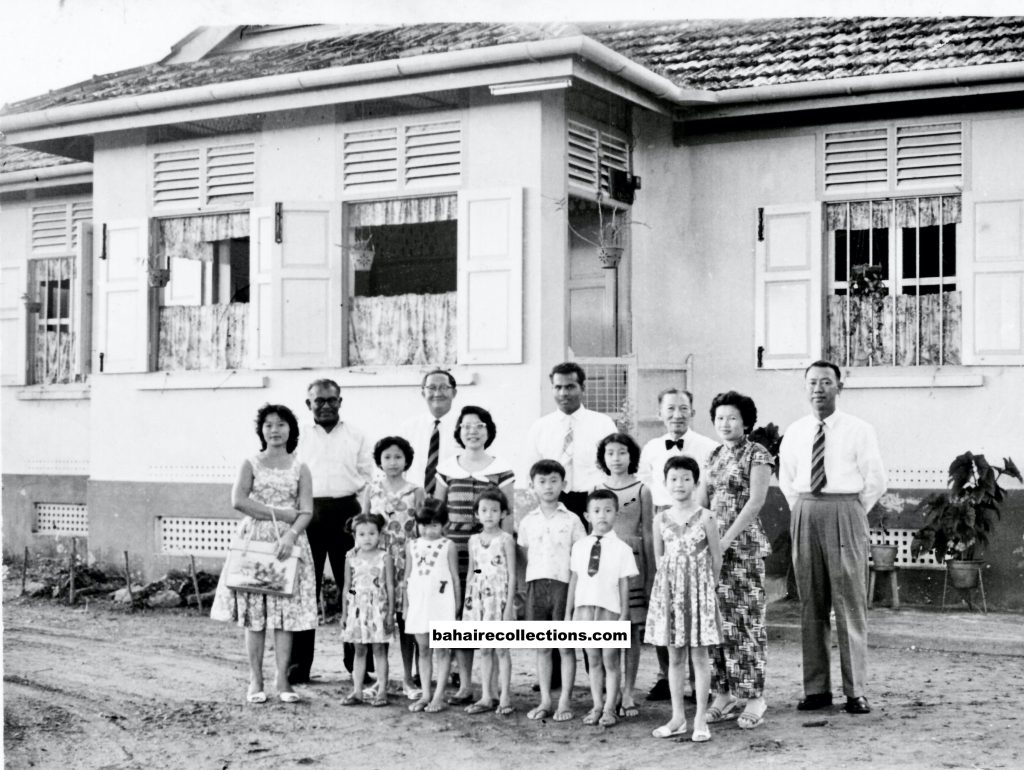
Visit to the home of Mr. Kung in Anak Bukit, 1961. Second from left is Appu Raman, with Leong Tat Chee to his left. Theresa is in front of Leong Tat Chee. At the extreme right is Chee Ah Kin. Yankee Leong stands third from right. Front row L-R: Susie, Doreen, Molly, Dennis, Benedict and Poh Choo.
At that time, Bahá’í literature was scarce in Alor Star. The believers were moved to serve by the spirit more than the knowledge. There were also visits by Bahá’ís from abroad. Dr. Heshmat Ta’eed of Persia had pioneered to Laos in 1955, and Miss Banu Hassan from the United States had served as a pioneer there from 1957 to 1962. Upon her departure from Laos in 1962, she handed her collection of rare Bahá’í books to Dr. Ta’eed, who in turn passed them on to Theresa in his visit to Alor Star in that same year. These books were highly useful for Theresa’s further understanding of the Cause. Further encouragement came through visits from other devoted believers. Among them were Mr. Abolfazi Beyzayee, a travelling teacher from Persia; Mr. S. Vasudevan of Malacca; and Mr. Alan Tan and Mr. Isaac D’Cruz of Seremban visited her in December 1962. Mr. Errol Seow and Mr. Leong Ho San from Kuala Lumpur also came to lend their support.
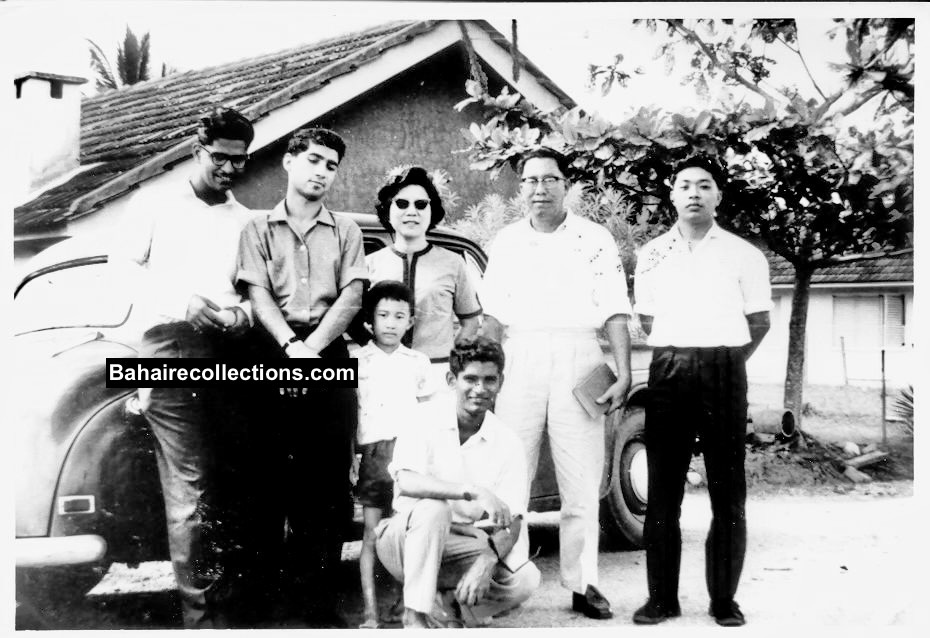
Visitors to the home of Theresa at 1255A, Jalan Pegawai in 1962 December. L-R: S. Vasudevan from Malacca, Abolfazi Beyzayee from Persia, Theresa, Mr. Kung, and Alan Tan from Seremban. Squatting is Isaac D’Cruz, with Master Benedict Chee standing to his right.
NEXT SCHOOL
In 1963, while Theresa Chee was teaching at the Sekolah Menengah Kebangsaan Seberang Perak, the government launched a major exercise to convert all primary schools into National-Type schools. As a result of this restructuring, Theresa was transferred to Sekolah Menengah Jenis Kebangsaan Keat Hwa. That same year, Mr. S. Nagaratnam, who had been teaching at Sultan Abdul Hamid College, arranged a mutual transfer with a Malay teacher from Keat Hwa Secondary School. This brought Nagaratnam to Keat Hwa, where Theresa was already serving. Meanwhile, in 1963, Theresa’s husband, Chee Ah Kin—then working as a technician in the Public Works Department for Roads and Buildings in Alor Star—received a promotion. He was given the choice of transferring to either Ipoh or Penang. Since Penang already had an established Bahá’í community, and Ah Kin’s hometown, Theresa encouraged him to choose Ipoh, where the need for the Faith was greater. Ah Kin came to Ipoh and worked as a technician in charge of waterworks and stayed at the YMCA. He became an asset to the Ipoh community. However, Theresa was determined not to move just yet. She postponed her own transfer, as she saw great potential in Nagaratnam to serve the Cause. She patiently waited until he accepted the Faith, and he finally did so on 23 June 1963.
TRANSFERRED TO IPOH
With her mission accomplished in bringing Nagaratnam into the Faith, Theresa began preparing to leave for Ipoh. In December 1963, a farewell gathering was held in her honor in Alor Star. Following that, Theresa officially transferred from Alor Star to Ipoh, leaving with a deep sense of relief and satisfaction, knowing that the community she had nurtured was now in capable hands, guided by the devoted souls she had brought into the Faith. In later years some of those who had embraced the Faith through her served on the National Spiritual Assembly of Malaysia, Auxiliary Board, Continental Board of Counselors, pioneers and in several other capacities.
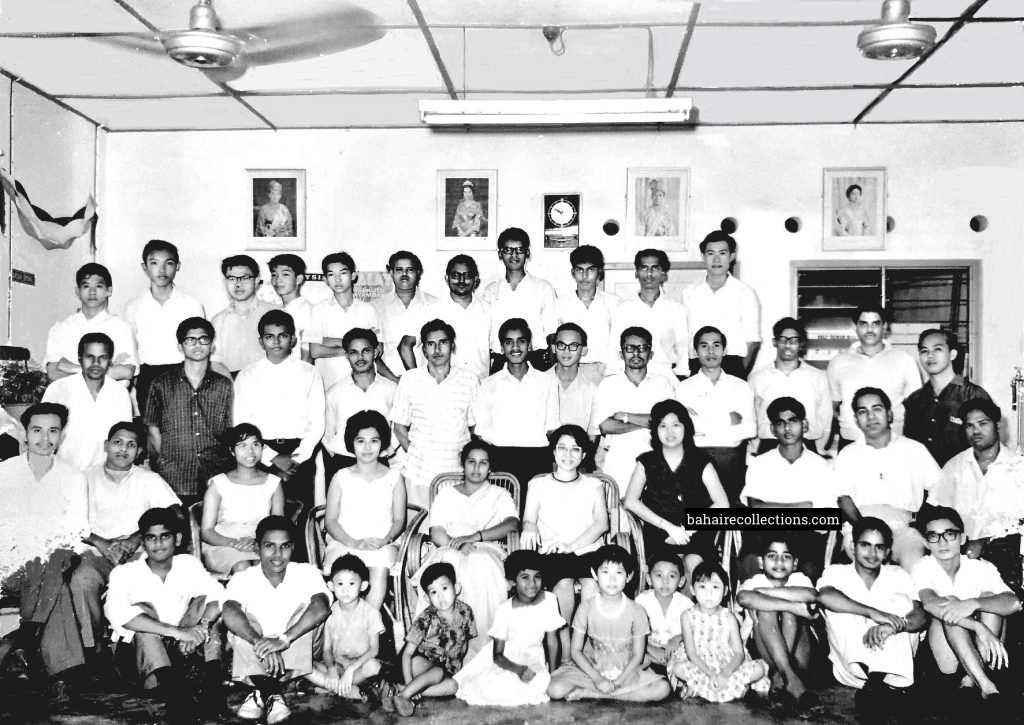
A December 1963 photo of farewell for Mrs. Theresa Chee leaving for Ipoh, seated sixth from left, with Mrs. Rajambaal Nagaratnam to her right. Nagaratnam is seated third from right. Phung Woon Khing is standing at the extreme right. Standing second from left at back row is Choo Yeok Boon with Mei Siew Hong standing at the extreme right in the same row. Seated on the floor from right are Yin Hong Shuen, R. Ganasa Murthi and master V. Manoharan. Seated on the floor at the extreme left is V. Nadarajan. Nadarajan and Manoharan are nephews of Nagaratnam who had accepted the Faith.
In Ipoh, she began teaching at Sekolah Menengah Jenis Kebangsaan Yuk Choy or Yuk Choy High School. By 1963, a Local Spiritual Assembly had already been established in Ipoh, and the coming of Theresa added further strength to this new Local Spiritual Assembly. The Bahá’ís of Ipoh initially met at the home of Mr. Jayabal. Later, they moved their gatherings to the business premises of Mrs. Rani Rathakrishnan, who operated a hairdressing salon named Pushpa Raya Beauty Saloon at 82 Jalan Yang Kalsom. This location became the first official meeting place for the Bahá’í community in Ipoh. Over time, many of the early believers relocated to other areas, and the core of the community came to rest with Theresa Chee, her husband Chee Ah Kin, and Mr. Krishnan Kunchamboo (K. Krishnan). Despite the family’s tireless efforts in teaching the Faith, Ipoh and its surrounding areas still faced a shortage of active manpower. There remained a constant need to cover multiple localities for both teaching and consolidation work.
Leong Tat Chee made frequent visits to assist in these efforts. A significant portion of Theresa’s own energy was devoted to guiding new believers and ensuring they understood the principles of the Faith correctly, especially when misconceptions arose. One notable instance occurred in an estate near Kampar town, where local believers had been pressured into making monthly financial contributions to hold the Nineteen Day Feasts in an overly elaborate manner. Disturbed by this misunderstanding of Bahá’í principles, Theresa visited the community and took it upon herself to educate them on the true nature of Bahá’í contributions—emphasizing that they must always be voluntary and offered in a spirit of love and sacrifice. Such was the kind of role Theresa played throughout her stay in Ipoh.
OWN BAHÁ’Í CENTRE
In 1965, the house of Theresa Chee at 6 Jalan Bunga Melor became the Bahá’í Centre. After staying for five years and four months at this address, the family Theresa moved to number 17 Jalan Bunga Melor in 1968. At that time low-cost single storey link houses were under construction. Under the Five-Year Plan, five communities including Ipoh were encouraged to buy their own Bahá’í Centres. Therefore, the Bahá’ís of Ipoh were desperately looking for a property. It was so timely that Ipoh Garden Berhad, the property developer offered a house for sale, with condition a total of M$1,000 to be paid immediately as down payment for a house costing M$27,900. Theresa played a key role in getting the needed money. Just 24 hours before the deadline, Theresa Chee rang up Mr. Lim Kok Hoon in Taiping, who immediately came with RM1,000 in small notes and shillings. The very next morning, Theresa took the notes and shillings and deposited with the developer. They then booked the link house, which cost extra by RM1,000 all because it was situated facing a beautiful field. This property at 12 Jalan Rajawali was purchased in 1976 and became the new official Bahá’í Centre, and the house at 17 Jalan Bunga Melor ceased to be a Bahá’í Centre.
EXTENDING ASSISTANCE
Theresa’s priority was spreading the Faith in and around Ipoh, often accompanied by K. Krishnan. She possessed an unmatched zeal for teaching the Cause of God. Together, they covered numerous areas, including Kampar, Taiping, Sungei Siput, Batu Gajah, Tanjung Rambutan, and Gopeng. With Mr. C. Subramaniam, headmaster of a Tamil school accepting the Faith in Sungei Siput, Theresa and K. Krishnan kept working on forming a Local Spiritual Assembly there. The first Local Spiritual Assembly of Sungei Siput was formed during Ridván 1965, held at the Sungei Siput Kampong Sentosa Community Hall. This milestone was achieved with the support of Theresa Chee, Chee Ah Kin, and K. Krishnan from the Ipoh Assembly. In Batu Gajah town, a Local Spiritual Assembly was established as early as 1962 but unfortunately lapsed due to unavoidable circumstances. However, in the third quarter of 1967, a fireside was organized at the Royal English School in Batu Gajah, which resulted in four new believers. The speakers at this event were Theresa Chee and Mrs. Betty Fernandez from Bagan Serai. She had also travelled to several parts in the state of Perak in later years to offer assistance to other communities.

A teaching trip in FIAT 600-D car of Theresa, 1974. At the left are Selvaraja, Kumar Rajagopal. At the right is Theresa with Doreen next to her, opening the door for another member of the teaching team.
SERVING IN VARIOUS CAPACITIES
As soon as Theresa accepted the Faith in 1960, she was called upon to serve in various capacities at both the national and regional levels. At that time, much needed to be accomplished for the Faith, with only a small number of committed and dedicated believers available in the country. The spirit of loving unity among this small group was overwhelming and served as a powerful motivation for their service. Their efforts were further inspired by encouragement from some Hands of the Cause of God and visits from overseas traveling teachers. The momentum of the Ten-Year Crusade, coupled with the impending establishment of the Universal House of Justice in 1963, propelled them to rise and serve the Cause on a new and higher pedestal. Theresa was among those who keenly felt the urgency and importance of the moment. Most of the early national Bahá’í activities in Malaya were held in Kuala Lumpur and Port Dickson, requiring Theresa to travel from Alor Star and later from Ipoh, often at considerable personal sacrifice. Listed here are some of the early and salient activities of Theresa.
At the Bahá’í Summer School held in Port Dickson in 1960, Dr. Muhájir proposed the appointment of state representatives to open virgin areas of the country to the Faith. On the very day she accepted the Bahá’í Faith, Theresa was appointed as the representative for the town of Alor Star. It was the first responsibility ever entrusted to her in the Bahá’í community.
Theresa served on the organizing committee of the Summer School held in Port Dickson from 3 to 6 August 1961 and also attended the event. A few weeks later, from 1 to 3 September 1961, Amatu’l-Bahá Rúhíyyih Khánum visited the believers of Malaya for the first time in Port Dickson. Theresa was present once again, this time accompanied by her younger sisters—Lily Ng, Christie, and Pauline—who had already embraced the Bahá’í Faith by then.

Summer School at Port Dickson, 1961. L to R. Lily Ng, Theresa Chee, Koh Ai Leen, Zeena from India, and Chiang Kim Lin.
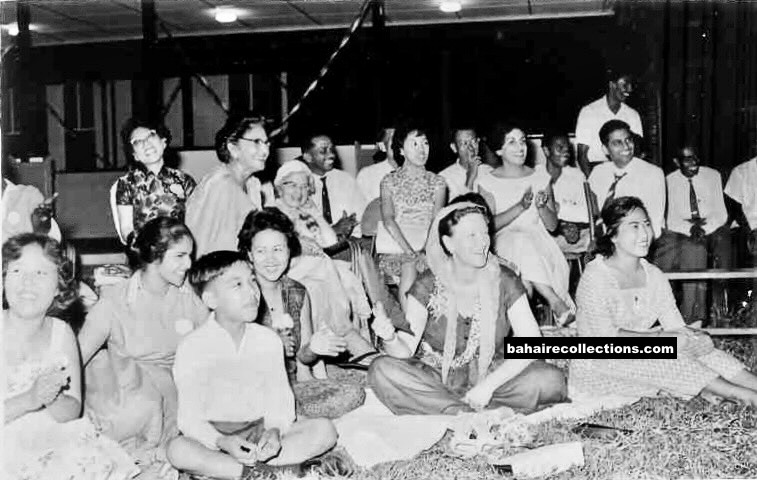
Amatu’l-Bahá in Port Dickson, 1961. Theresa is seated at the extreme left, next to Shirin Fozdar. To the left of Shirin is Jessie Revel. Amatu’l-Bahá is seated on the canvas, with Lily Chinniah on her left and Lily Jansz and Betty Fernandez on her right.
The Bahá’í youths of Seremban organized the first Pan-Malayan Youth Conference at the Negeri Sembilan Indian Association Hall from 16 to 18 December 1961. Theresa, who by then was already well-grounded in the Faith, delivered a talk on the history of the Bahá’í Faith. In 1962, the National Teaching Committee of the Federation of Malaya and Singapore appointed her as the representative for the entire state of Kedah, where she began addressing the needs of the Faith. At the Summer School held at the Malacca Youth Hostel in Pantai Kundor from 2 to 5 August 1963, Theresa presented a progress report on the status of the Faith in Kedah. That same year, the National Teaching Committee appointed her to serve on the Women’s Affairs Sub-Committee, at a time when many Bahá’í women in Malaya had yet to step forward to serve alongside their male counterparts. As history would have it, Theresa emerged as one of the foremost heroines of the Bahá’í Faith in Malaysia.
In 1964, Theresa served as a delegate to the first National Convention of Malaysia, where she delivered a talk on teaching the Faith to the Chinese community. She also acted as one of the tellers for the election of Malaysia’s first National Spiritual Assembly. At the same convention, a special panel was formed to answer questions from the floor. The panel comprised Theresa, Anthony Louis, Raymond Peter, and Tushar Kanti-Paul of Malacca—individuals regarded as among the most knowledgeable in the Faith at the time. In 1965, the National Spiritual Assembly of the Bahá’ís of Malaysia launched The Malaysian Bahá’í News as its official publication. To support this effort, Regional Correspondents were appointed to provide timely reports to the chief editor. Theresa was named Regional Correspondent for the Ipoh area.
In 1965 and 1966, Theresa served as a member of the National Teaching and Consolidation Committee for the Northern region. During the same period, she also served on the State Teaching Committee of Perak, working alongside Mrs. Betty Fernandez of Bagan Serai and Mr. T. Krishnan of Kuala Kangsar.
 Naw-Rúz celebrations organized in Ipoh and attended by believers in and around Ipoh. Theresa is seated third from right and Betty Fernandez fifth from right. Rogers Sammy Chung stands at the extreme left, with Chee Ah Kin next to him.
On 1 July 1966, Theresa attended a teaching conference in Kuala Kangsar town in Perak organized by the Perak State Teaching Committee. A key topic discussed was the severe shortage of manpower in Perak. At the time of Theresa coming to Ipoh in early 1964 only two communities were strongly established in the whole of Perak- Ipoh itself and Bagan Serai towns. The conference identified 40 localities to be opened to the Faith, and an additional 20 with the potential to form Local Spiritual Assemblies by Ridván 1967. Serving on the three-member National Teaching Committee was a particularly demanding and stressful responsibility for Theresa, yet she continued to serve with steadfastness. In every hardship endured in the path of service, Theresa always found an inner joy.

July 1966. Hand of the Cause Mr. Ṭarázu’lláh Samandarí addresses the gathering in Ipoh, with his grandson Soheil at the extreme left translating for him. To the left of Mr. Samandarí is Theresa, who organized the visits of the Hand to Ipoh and Sungei Siput.
In that same year of 1966, the first Chinese Teaching Conference in Malaysia was held in Ipoh, organized by the Perak State Teaching Committee, in which Theresa was a member. The speakers came from Taiping. Mr. Woo, Chairman of the Local Spiritual Assembly, delivered an impressive address and was regarded as one of the finest Mandarin speakers in the Chinese Bahá’í community. Theresa Chee, Toh Theam Seang, and Yeoh Chai Lye—then an Ipoh Municipal Councilor—were present to lend their full support. The success of this pioneering conference inspired the organization of similar gatherings in other parts of the country.
Theresa did not confine herself to serving only one community owing to language limitation. She had supported activities held for the Tamil-speaking friends. As early as September 1964 she participated in a teaching conference held in the Tamil language in Sungei Siput town where Yankee Leong too was present. Another teaching conference was held in the Tamil language in Sungei Siput Town Hall on 16 August 1966 with about one hundred people attending. Here Theresa participated and said prayers. In later years she had made a few trips to the Asli villages too.
As part of a major effort to publicize the Faith during a period of intensive proclamation, the National Spiritual Assembly invited Miss Jeanne Frankel—who had previously visited Malaya in 1957 and early 1958—to return in 1968 to assist with proclamation and consolidation work across Malaysia. In Ipoh, Theresa played a key role in supporting these efforts. A special meeting was organized at Yuk Choy High School, where Theresa was a teacher. Thanks to her efforts, an impressive audience of 500 students attended the event to hear Jeanne Frankel speak about the Bahá’í Faith.
Mr. Jenabe Caldwell from Alaska conducted the first nine-day in-depth institute in Malaysia at Port Dickson from 8 to 16 December 1972. Twenty Bahá’ís participated in this intensive program, including Theresa. The institute offered a deep immersion into the ocean of the Sacred Writings, greatly enriching the spiritual understanding of those who attended. Following the success of the Port Dickson session, several three-day institutes were held throughout the country to train and deepen the believers in preparation for the large-scale teaching campaigns that were being planned. Theresa coordinated one such institute at the City Council Holiday Bungalow in Penang from 26 to 28 January 1973, with assistance from Mr. Tan Lee Soo Hock.
 First Nine-Day Spiritualization Institute in Port Dickson. Sitting L-R: Lily Ng, Rajambaal Nagaratnam, Theresa Chee, Yankee Leong, Dawood, Jenabe Caldwell, Shantha Sundram, Betty and Lily Chinniah. Standing L-R: R. Ganasa Murthi, Navanita Sundram, Koh Ai Leen, G. Appala Naidu, Nagaratnam, Dr. M. M. Sreenivasan, Mathews Wagner, N. Nagendran, Kenneth Mak, Dr. M. Singaravelu, M. Ganesan and Ramu Naidu.
AUXILIARY BOARD MEMBER
On the evening of 12 May, Dr. Muhájir met the believers in the National Bahá’í Centre in Kuala Lumpur to discuss about the Six-Month Plan beginning on 12 May 1976 and ending on 12 November 1976. More than one hundred friends from various parts of the country turned up. Counsellors Yankee Leong, Vicente Samaniego and Firaydun Mithaq were present as well. At this meeting Dr. Muhájir announced, “I am now appointing Theresa Chee, Spiritual Mother of the Northern Bahá’ís an Auxiliary Board member.” Theresa Chee was visibly shaken by this announcement. That was certainly a title that befits her so well on account of her indelible services. She was instrumental in bringing into the Faith a number of believers whom she herself nurtured into maturity and building up the northern communities in Peninsula Malaysia. She was the first believer in Malaysia whom a Hand of the Cause had appointed in person as an Auxiliary Board member. This spiritual mother started her first duty as Board member on the next day itself. She was present to give support to the national institution on the implementation of the Six-Month Plan that was launched on 13 May 1976 in the Jaya Puri Hotel in Petaling Jaya.
Although Theresa was a member of the institution of the learned, her extensive experience and long-standing commitment to the Faith led to her being frequently called upon to support various other Bahá’í activities. One such occasion was the “Teen Institute” held in Port Dickson from 19 to 22 July 1979. This event brought together many Bahá’í youth in their early teens for a deeper exploration of the teachings of the Faith. Auxiliary Board members Theresa and Mr. D. Rama Naidu led the institute, conducting sessions tailored to the needs of different age groups. This was a resounding success!
AS A BOARD MEMBER
Theresa was always clear in her mind. Until she was relieved of her duties as Board member in 1991, she never regarded her appointment as a Board member as a position of power or prestige. To her, it was simply another channel to serve—albeit one that came with great responsibility. As a Board member, Theresa fulfilled her duties with dedication and excellence. She appointed capable assistants, who found it a joy to serve alongside her. She inspired both the Bahá’í community and her assistants not through pressure or authority, but through her innate love and words as mild as milk. Theresa had her finger on the pulse of the community and was ever alert to opportunities for service. She was constantly on the lookout for individuals to assist with specific tasks for the Cause. She paid close attention to school holiday schedules and would warmly invite students to her home. After offering them generous meals, she would gently assign them meaningful responsibilities—with the same love and care that defined her entire approach to service.
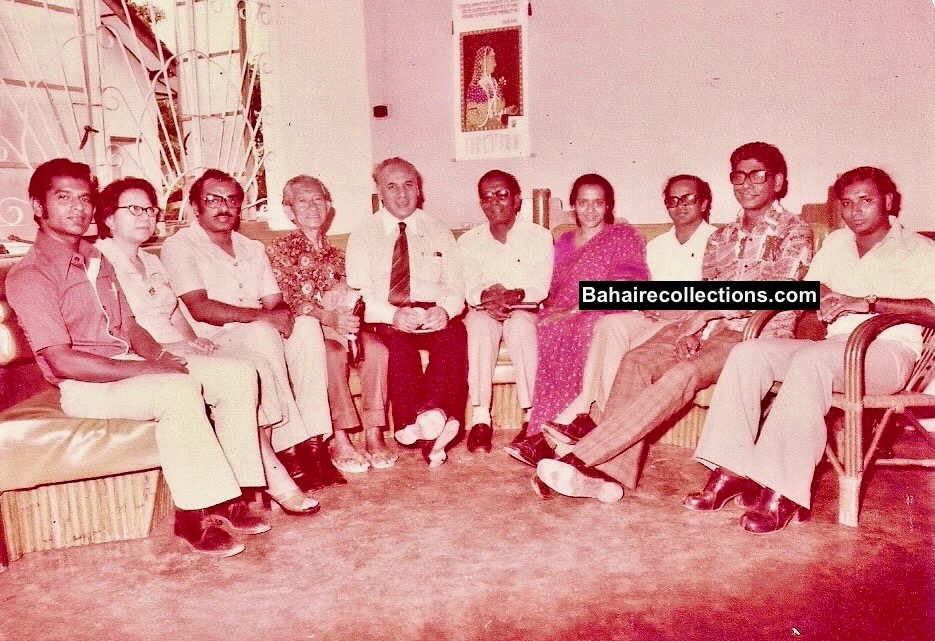
Hand of the Cause of God Dr Muhájir meets some members of the institutions in Malaysia in May 1978. (L-R) member of the National Spiritual Assembly Isaac D’Cruz, Auxiliary Board member Theresa Chee, Board member Dr. M. M. Sreenivasan, Counsellor Yankee Leong, Dr. Muhájir, Counsellor Inbum Chinniah, Auxiliary Board member Shantha Sundram, Auxiliary Board member R. Ganasa Murthi, members of the National Spiritual Assembly S. Nagaratnam and S. Balasekaran.
One of Theresa’s outstanding qualities was her unwavering obedience to both the elected and appointed Bahá’í institutions. She would often remark, “A fish cannot live out of water;” similarly, she believed that believers must remain connected to the institutions in order to stay spiritually alive. Theresa consistently encouraged the friends to read and internalize the messages from the Supreme Body, emphasizing that this exalted institution is none other than the voice of Bahá’u’lláh Himself.

South East Asia Conference in Kuching city, Sarawak, December 1978. Seated L-R: Theresa, Chin Yun Sang from Brunei, Betty Fernandez from Australia.
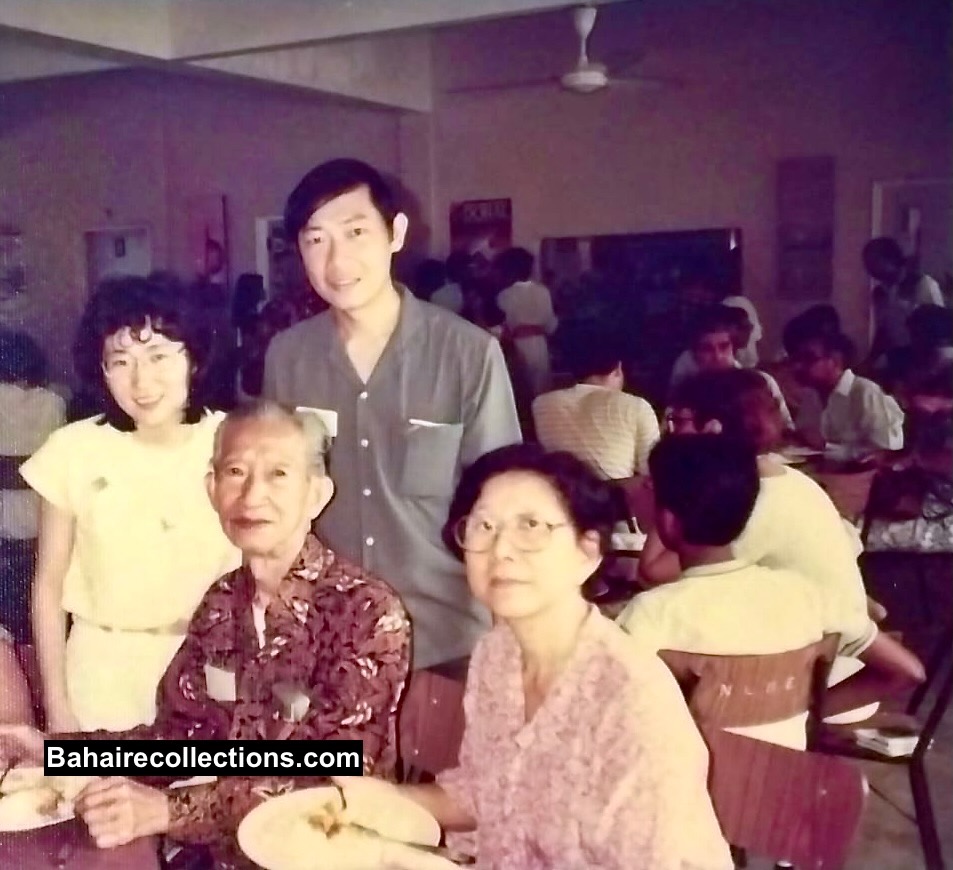 Winter School in Port Dickson, 1985. Theresa seated with her father Counselor Yankee Leong. Standing L-R: Hiroe Konda from Japan, Cheng Jooi Sey. (Photo credit: Cheng Jooi Sey)
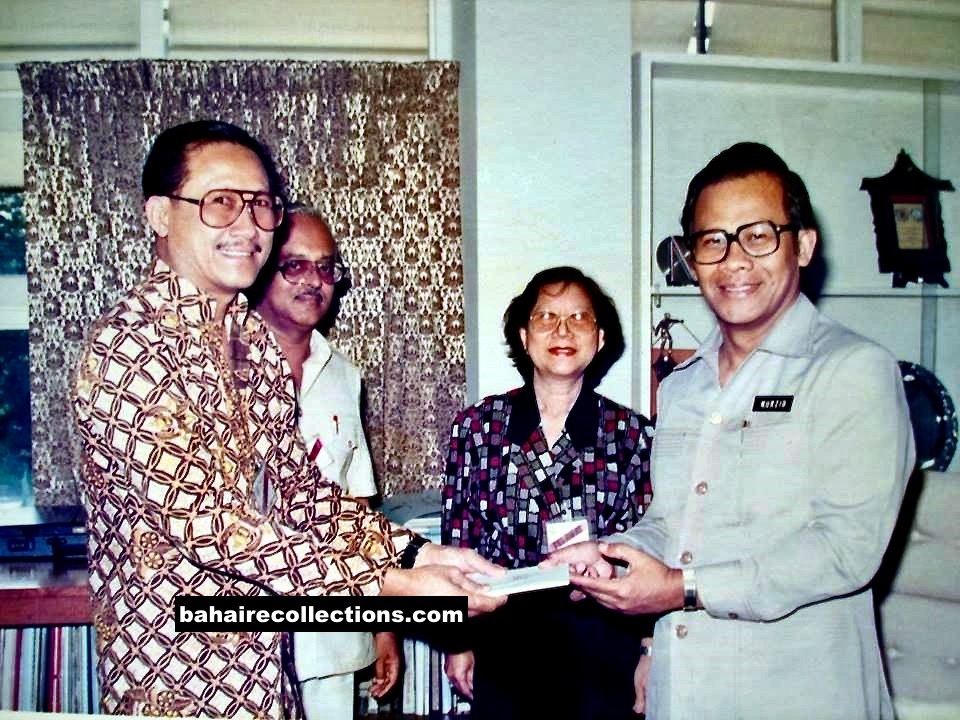 Assistant Superintendent of Police Leong Ho Chiew presenting The Promise of World Peace Statement to the State Secretary of Perak state, 1986. At the back are K. Krishnan and Auxiliary Board member Theresa Chee.
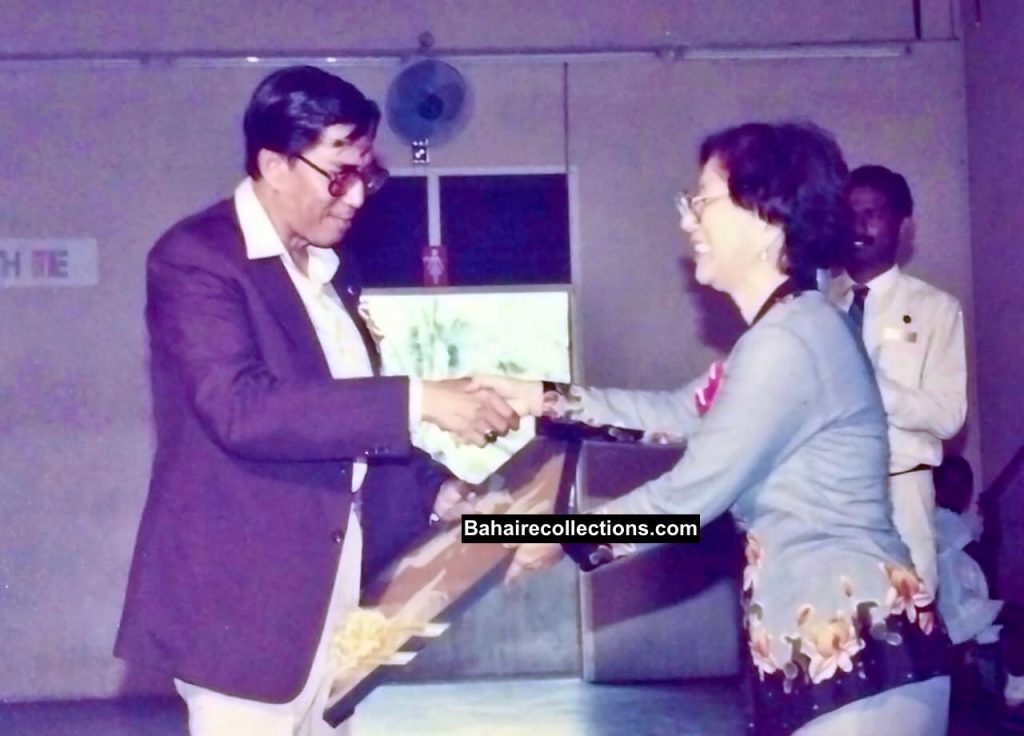
Board member Theresa presenting a souvenir to the Chieftain of Larut Matang district in Perak on the occasion of World Peace Conference in Taiping in 1986. (Photo credit: Cheng Jooi Sey)

Auxiliary Board member Theresa with her Assistants at a training seminar in Balakong in May 1987.

With Amatu’l-Bahá at a meeting of Auxiliary Board members in Taiwan, 1988. Seated R-L: Theresa, Violette Nakhjavani, and Amatu’l-Bahá. S. Satanam stands second from right.
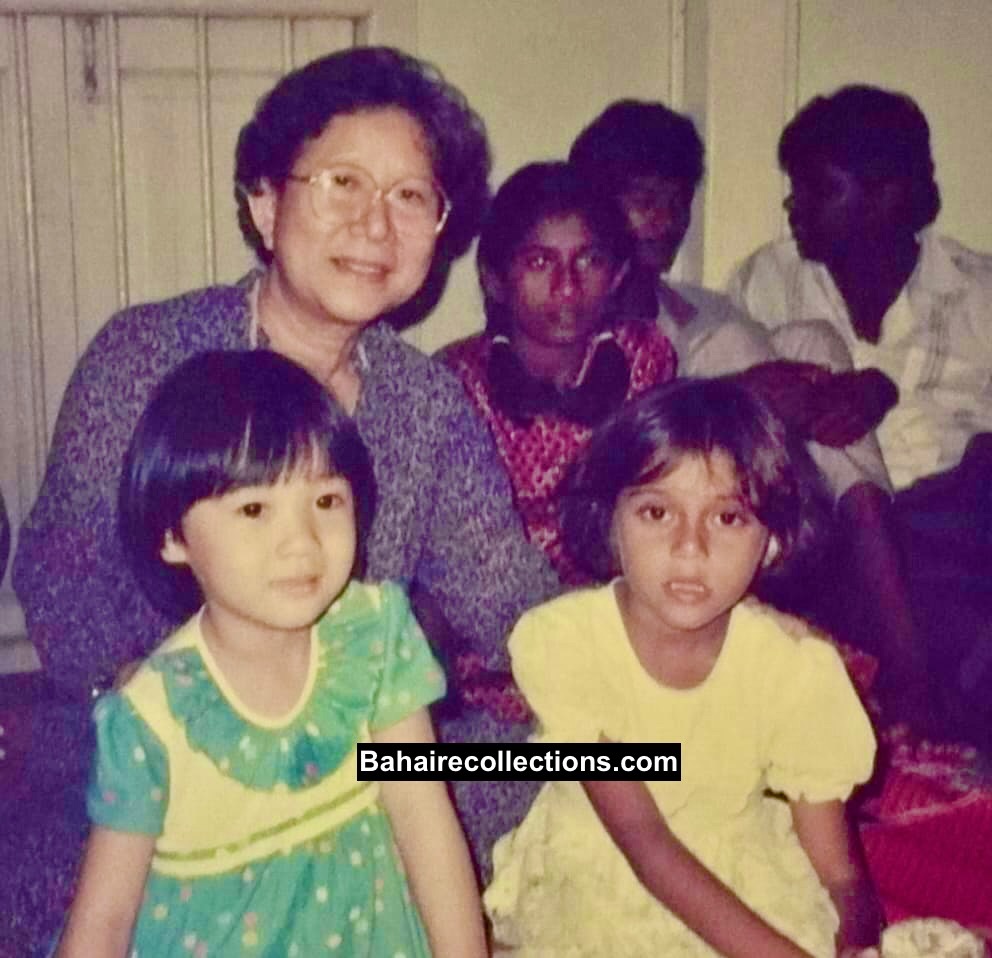
Board member Theresa with some children and youth in Taiping, 1988. (Photo credit: Cheng Jooi Sey.)
TRAVELS ABROAD
Theresa undertook several international travels in service of the Faith. In 1988, she traveled to Taiwan to attend a meeting of Board of members, along with fellow Board member Satanam of Seremban. In Taiwan they had the bounty of meeting with Hand of the Cause Amatu’l-Bahá Rúhíyyih Khánum. She later joined her sister, Rose Ong of Singapore, on visits to Bahá’í communities in Myanmar and Mongolia. She also traveled to Cambodia and Indonesia for similar purpose.
In 1992, responding to the call of the Universal House of Justice for Chinese Bahá’ís to visit their ancestral villages in China, Theresa joined Counselor Lee Lee Ludher, Rose Ong, Jin Quah, Mrs. Lily Chinniah, and Mrs. Veronica Anthony of Petaling Jaya on a visit to China, where they toured their ancestral hometowns.
She also visited Omagh in Northern Ireland. At the age of 63, she travelled alone and arrived there on 17 June 1988. Whilst in Omagh Theresa visited the Bahá’í communities and Chinese speaking communities throughout the North. While there she also stayed with Mrs. Vida Astani. During her stay, Vida introduced her to local Bahá’ís, and one of the highlights of the trip was sharing a dinner at Vida’s home with the late Mr. Adib Taherzadeh, former member of the Universal House of Justice.
EVENING OF HER LIFE
Theresa retired as a teacher on 23 April 1977, when still a Board member, and now had more time to serve the Cause full time. Although Theresa began to slow down in her seventies, nothing could diminish her zeal for serving the Cause. She continued to undertake several teaching trips, one of the most notable being to the distant state of Kelantan—a journey that once again demonstrated how she left an indelible mark in every field of Bahá’í service.
In 1998, Santanasamy and his wife Cecelia, who were residing in Kelantan, met Theresa during a visit to Taiping. They encouraged her to travel to Kelantan to teach the Chinese community. Theresa hesitated, explaining that she could not teach the Faith in Chinese. Cecelia reassured her that the Chinese community in Kelantan primarily spoke Malay, which dispelled Theresa’s concern.
With that encouragement, Theresa embarked on her first teaching trip to Kelantan—traveling alone by bus. She stayed with Pak Chin in Pasir Mas and Tan Poh Kee in Pasir Puteh. In 2000, she returned to Kelantan and stayed with Sarah Ng, a new believer who was unwell at the time. Theresa lovingly cared for her during her stay. Sarah has always expressed deep gratitude to Theresa for her presence and support during that period. She shared that her faith in Bahá’u’lláh and her reliance on prayer were greatly strengthened through that experience. Today, Sarah serves as the chairman of the Local Spiritual Assembly of Tanah Merah in Kelantan.
During all her visits to Kelantan, Theresa made it a point to visit the friends and stayed a few days in each home, where she was always warmly welcomed. On one occasion, she brought along her grandson Ian and his friend Han Xian, both of whom were waiting for their Sijil Pelajaran Malaysia (SPM) examination results. The two teenagers were deeply touched by the warmth and kindness extended to them by the Kelantan Bahá’ís—a hospitality that left a lasting impression. On a later trip, Theresa was accompanied by her son-in-law, Tan Boon Tin, as well as two other believers, Ronnie Koh and Leong Seng Tong. Throughout these visits, Theresa formed strong bonds with the believers in Kelantan. These connections endured, and from time to time, the Kelantan Bahá’ís would travel to Ipoh to visit her. Thus, Theresa always left a profound impact on the hearts of everyone she encountered.
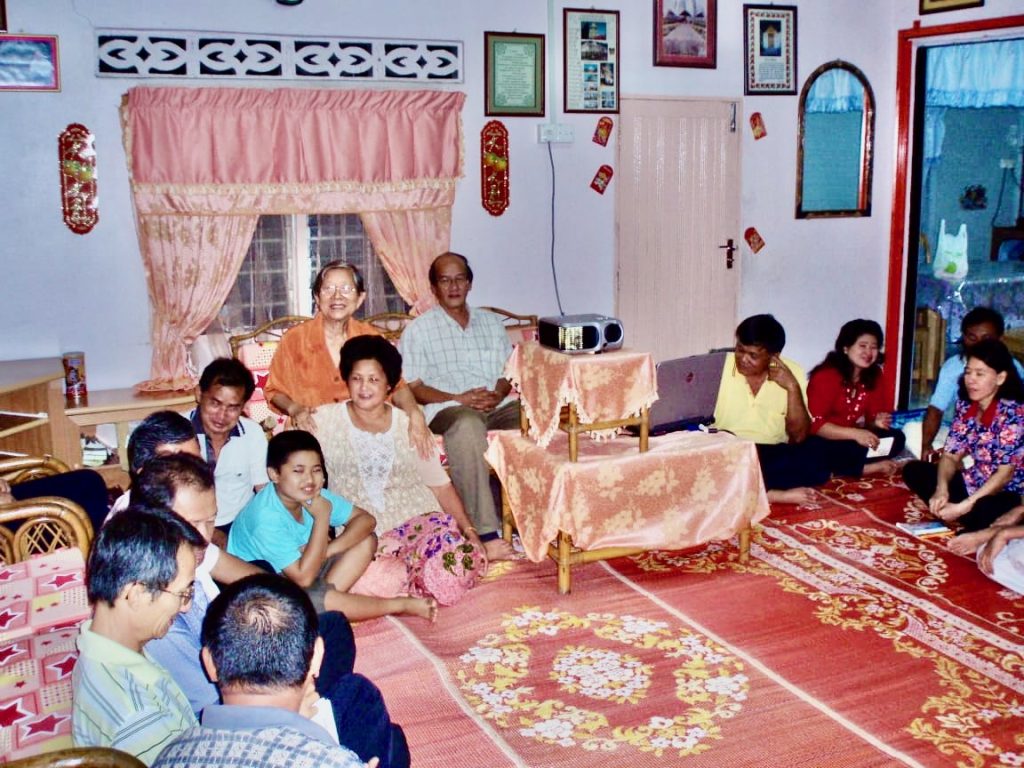
Visit to the home of Pak Chin in Pasir Mas, Kelantan in 20o6. Seated on the sofa are Theresa and her son-in-law Tan Boon Tin. Seated on the floor in front of Theresa are Pak Chin and his wife. (Photo credit: Tan Boon Tin)
Throughout her Bahá’í life, Theresa remained deeply prayerful. She was often seen in a meditative state, with a Bahá’í book in hand. Her favorite book was The Kitáb-i-Íqán, which she read repeatedly with great devotion. In her final years, she spent much of her time immersed in this sacred text—described by the beloved Guardian as the most holy book after the Kitáb-i-Aqdas. Even in old age, she continued her reading with the aid of a magnifying glass. Sensing that her earthly days were drawing to a close, Theresa left a handwritten note for her daughter, Doreen, tucked within the pages of her beloved book. It read: “Dor, Please read these two pages before I close my eyes. Bahá’u’lláh bless you forever for your care and devotion. Your most thankful mum.” She had placed the note on the page that has the following verse: “These are among the attributes of the exalted, and constitute the hallmark of the spiritually minded.”
Her thoughts were constantly centered on the needs of the Faith. Nothing brought greater joy to her heart than news of triumphant victories for the Cause. She found immense happiness in the steady stream of visitors to her home, often expressing that there was nothing sweeter than meeting believers.
Even in the evening of her life, Theresa remained eager to attend Bahá’í activities, whether held in the homes of believers or at the two Bahá’í Centres in Ipoh. She had committed to memory numerous Bahá’í stories and sacred texts, which she lovingly shared with others. Remarkably, even in her later years, her memory remained sharp—she could recall the names of many early believers whose contributions had long faded from the minds of the younger generation. Though age brought some difficulty with speech, her mind stayed keen.

Winter School in Ipoh, December 2018. Standing L-R: Dalim, Josephine, Nasrin, and Dyah Arum Vena. Sitting L-R: Liew Soo How, Doreen, Theresa, Lee Lai Wah and Susan.
PASSED AWAY
At the age of 98, Theresa developed dementia and began using a walker. However, after a fall, the family—out of concern for her safety—placed her at the Twilight Nursing Home in Ipoh when she was 99, where they visited her daily. On 25 April 2025, the family and close friends organized a celebration for her hundredth birthday at the nursing home, with hopes of holding a larger gathering in July 2025. Sadly, she passed away before 11:30 pm on 1 June 2025, at the blessed age of 100—just two days after the passing of her younger sister, Lily Ng, in Seremban on 30 May 2025. A befitting funeral was held for this spiritual mother of the community, and she was laid to rest at the Bahá’í Memorial Park on Lahat Road, Ipoh. Hundreds of individuals spanning three or four generations came to pay their last respects to one who had served the Cause with unwavering devotion. In her passing, the Bahá’í community lost a true and steadfast servant of Bahá’u’lláh—one who had consecrated 65 years of her life wholly to the advancement of His Cause.
 Celebration of the 100th birthday of Theresa by family and close friends. (Photo Credit: Tan Boon Tin)
TRULY A SPIRITUAL MOTHER
She was a “Spiritual Mother” to all in the community. There is a saying, “Charity begins at home”—and Theresa truly lived by it. She ensured her three children received the best of both Bahá’í and academic education. She took along her sons, Dennis Chee Tat Ming and Benedict Chee Tat Hong, and her daughter, Doreen Chee Lai Fong for teaching trips or home visits when they stayed in Alor Star. Their upbringing was so good that they even organized firesides for their school friends at their tender age when they were living in Ipoh. All her three children married Bahá’ís of good standing and continue to serve the Cause with dedication. Theresa’s eleven grandchildren and thirteen great-grandchildren too are following her footsteps.
Theresa’s magnanimous heart embraced everyone she encountered as part of her extended family. Her home became a home for all. She would never allow visitors to leave without first sharing a meal. If she received prior notice of someone’s visit, she would be found in the kitchen, lovingly preparing food to welcome them. Her nurturing spirit and open heart made her a true spiritual mother to many throughout the country.
Theresa Chee always had a tender heart for the simple and downtrodden. She regularly visited those in need and offered whatever assistance she could. Whenever she heard of someone facing difficulties, no distance was too great—she would make the effort to visit them, offering words of comfort and strength. Her counsel was always thoughtful and tailored to the capacity of the listener. To some, she would share uplifting passages from the Bahá’í Writings; to others, especially the simpler souls, she would tell meaningful stories that carried spiritual lessons.
When she came across struggling students or families facing financial hardship, she would quietly slip some money into their pockets—always discreet, always generous. Her acts of kindness were never for recognition, but always out of genuine love and a deep sense of compassion.
Theresa’s constant counsel to those in distress was to maintain unshakable faith in God and to cultivate a positive outlook on life. She often emphasized that there is no problem too great for God to resolve. “God is the Remover of all difficulties,” she would remind others, encouraging believers to turn to prayer whenever they felt hurt, rather than withdrawing from community activities.
Whenever she recognized talents in new believers, Theresa made sure to nurture and utilize them for the advancement of the Faith. She would thoughtfully provide them with a list of activities, allowing them to choose those best suited to their abilities and interests. As a mentor to many across the country, her guidance helped shape and strengthen the Bahá’í community.
Theresa carried the difficulties of believers as if they were her own, praying earnestly for them and their children. She kept a list of individuals for whom she offered prayers daily. When faced with her own health challenges, she would spiritually commune with the Hand of the Cause, Dr. Muhájir—her revered spiritual father—asking him to intercede on her behalf.
A true balm to the wounded, Theresa was known for her compassionate listening. After offering a patient ear, she would gently guide others on how to overcome their trials and tribulations through prayer and steadfastness. Those who left her home invariably felt a deep sense of relief and renewed strength.
Theresa never ceased to encourage believers in fulfilling their Bahá’í duties, whether teaching, contributing to the funds, or, most importantly, living the Faith wholeheartedly. She made a profound and lasting impression on her spiritual children. Many believers, when passing through Ipoh, made it a point to visit her and share a conversation.
When she was appointed as an Auxiliary Board member in 1976, the Hand of the Cause Dr. Muhájir honored her with the title “Spiritual Mother of the Northern believers.” She truly became a spiritual mother not only of the northern believers, but to all who crossed her path in Malaysia.
A VOID DIFFICULT TO FILL
In her passing, the community of the Greatest Name has lost one of its stoutest pillars—one who led a true Bahá’í life and devoted every ounce of her energy to the Faith for some 65 years. Over the course of those 65 years, those who had been close to Theresa learned invaluable lessons from her exemplary service and the steadfast Bahá’í life she led. On her part, she had lived a long life, witnessing firsthand the gradual growth and development of the Faith, with her own active participation being an integral part of its journey. Theresa has indeed added lustre and decorated the pages of Bahá’í history.
She used to recall with great pride, that Bahá’u’lláh had in His infinite mercy chosen her for His Faith. From the time she accepted the Faith her position had always been that of submissiveness to the commandments of Bahá’u’lláh. Her favourite passage, as she would often relate in her conversation with believers was this from the long obligatory prayer, “Thine is the authority to command whatsoever Thou willest. I bear witness that Thou art to be praised in Thy doings, and to be obeyed in Thy behests, and to remain unconstrained in Thy bidding.” This passage encapsulated her spirit of devotion and unwavering obedience throughout her life.
The message from the Spiritual Assembly of the Bahá’ís of Malaysia dated 2 June 2025 sent to all the Local Spiritual Assembly in Peninsula Malaysia sums up the essence of Theresa’s legacy:
Her exemplary labours in several areas of Bahá’í service, coupled with her full dedication, humility, sincerity, and radiant disposition will forever provide a shining example to rising generations in the Malaysian Bahá’í community. Bahá’í history would have it that this maidservant was selected by the wondrous hands of Bahá’u’lláh to play a distinctive role in the Faith, which she has carried out with utter sincerity and commitment.
A. Manisegaran
31 July 2025
SOURCE:
- Manisegaran, Jewel Among Nations – An account of the early days of the Bahá’í Faith in West Malaysia, Splendour Publications (2003)
- A Manisegaran, Leong Tat Chee – A Sincere Promoter of The Cause Bahá’í Publishing Trust of Malaysia (2017)
- Yankee Leong’s letters to his daughters.
- Notes from Rose Ong and Lily Ng
- Author’s personal conversation with Mrs. Theresa in 2002, 2016 and 2018
Copyright©bahairecollections.com
You may leave your comments at: info@bahairecollections.com
Readers may wish to read this interesting story of Lily Ng, younger sister of Theresa: